Remodeling a kitchen in an old home is a unique challenge that requires balancing modern needs with architectural history. At Squareroot Construction, we have completed a luxury kitchen remodels in dozens of old homes throughout Denver.
Back then, kitchens were utilitarian. Closed off and tucked away. Designed strictly for work. They weren’t gathering places or social hubs, but rather functional rooms meant to serve a single purpose.
Today? Everything has changed.
The kitchen is where everyone ends up.
It’s where meals are made, stories are shared, homework is finished, and wine is poured. It’s where guests lean against the counter while dinner simmers. It’s where families naturally gather, and your kitchen deserves a luxury update that preserves your home’s historic charm.
What Do Homeowners Look for During a Luxury Kitchen Remodel of a Historic Home?
In many of Denver’s historic neighborhoods, a luxury kitchen remodel is the technical and creative process of turning a cramped workspace into a modern social hub. Because modern life requires more space for tools and entertaining, this process often involves expanding the footprint to create open layouts that connect to living spaces.
For a homeowner in a Victorian or a 1920s bungalow, this transformation includes:
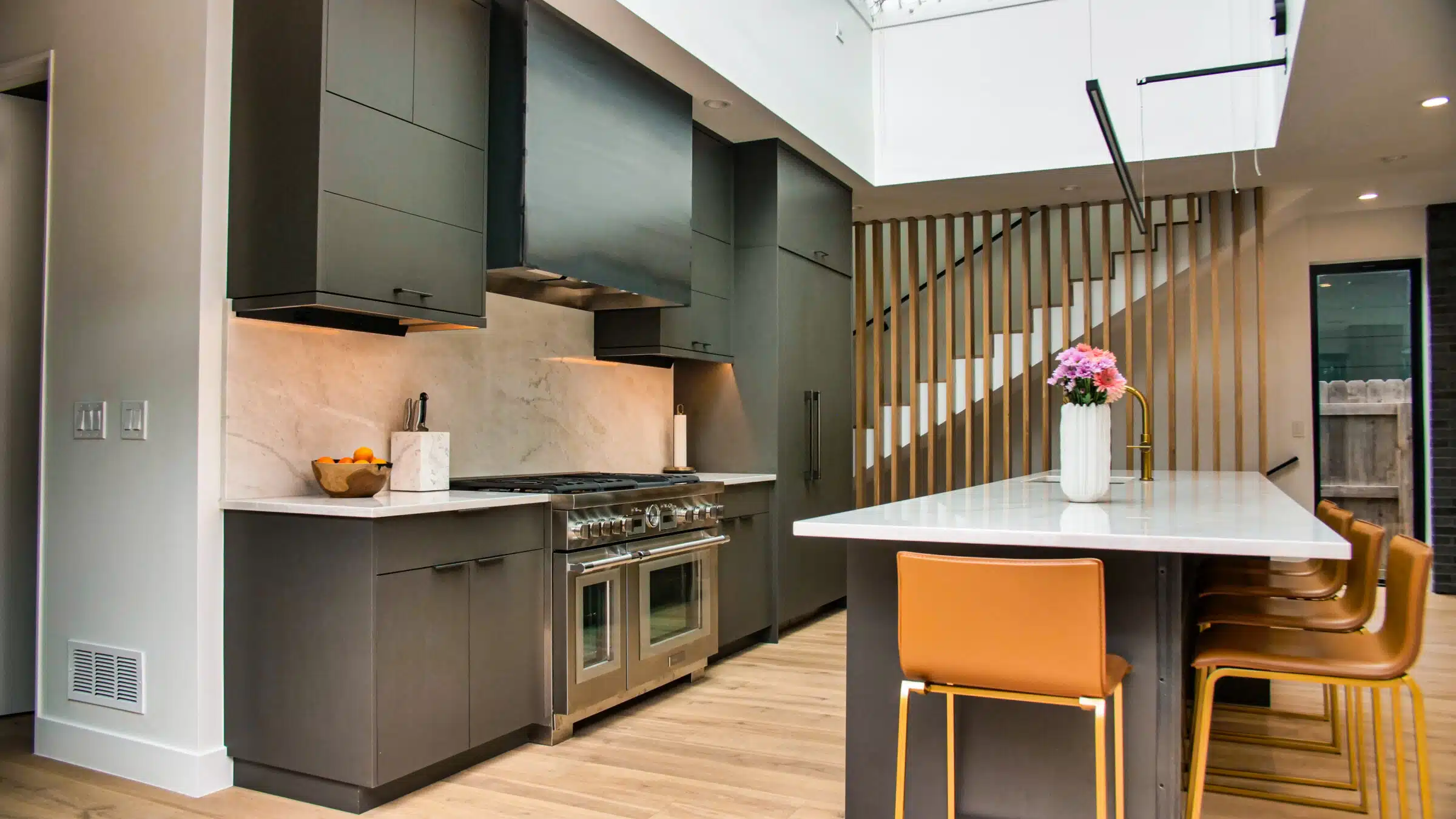
- Expansive Islands: Large surface areas that anchor the room and provide space for guests to lean against the counter while dinner simmers.
- Professional Grade Features: Incorporating high-end appliances, custom tile backsplashes, and functional additions like butler’s pantries or dishwasher drawers.
- Seamless Integration: Using quality craftsmanship to ensure the new work complements the existing neighborhood fabric.
- Open Layouts: Integrating the kitchen with the rest of the home, often connecting it to living spaces to remove that isolated feeling.

Why is a Quality Remodel Important for Older Homes?
Improving a historic kitchen is a vital investment in the long-term health of the property. Beyond the surface-level beauty, we focus on the fundamentals when remodeling older homes in Denver because what is behind the walls is as important as what goes on them.
- Correcting Structural Issues: Homes over a century old often have uneven floors due to decades of settling. We prioritize leveling and reinforcing the structure at the beginning so every cabinet and appliance sits on a solid foundation.
- Modernizing Vital Utilities: Older homes frequently contain layers of previous work, including outdated knob-and-tube wiring or inadequate plumbing. A professional remodel allows us to update electric, plumbing and HVAC systems to meet modern safety and performance standards.
- Exposing the Original Bones: We prefer to strip away questionable previous remodels to evaluate what needs repair and what can be preserved, which is our way of honoring the house.
Who Benefits Most from This Professional Approach?
This type of project is ideal for the “Historic Home Steward” who wants to improve their lifestyle without destroying the soul of the original architecture.
- 1. The Pragmatic Professional: Homeowners who want the assurance that their project will get the attention it deserves and that do not want to risk hiring an unreliable contractor.
- The Community-Minded Homeowner: Those who want their investment to support local businesses that treat tradespeople. We live where we work.
- The Active Cook: Homeowners who no longer want to feel isolated behind a wall and instead want to remain part of the conversation while they cook.

How to Start a Historic Luxury Kitchen Remodel: A Step-by-Step Guide
Starting a project in an older home requires looking beyond the aesthetics to the structural reality. We begin with the fundamentals because what is behind the walls matters more than what goes on them.
1. Stripping Back the Layers
Old homes often have layers of previous remodeling that are sometimes questionable. We prefer to expose the original bones of the house first. Only then can we evaluate what needs reinforcement or repair.
This is our way of honoring the house.
Because it can’t just look good—it has to be good.
2. Addressing Structural and Utility Surprises
Once demolition begins, we often uncover common issues that must be fixed:
- Crumbling lath and plaster walls
- Outdated knob-and-tube wiring
- Structural framing modified without reinforcement
- Inadequate heating and cooling systems
- “Homeowner special” plumbing or electrical work
3. Leveling the Foundation
In many pre-1920s homes here in Denver, settling over the decades has left floors uneven. If we do not address this immediately after demolition, every cabinet, appliance, and island installed on top of it is compromised. Leveling and reinforcing at the beginning guarantees your new kitchen sits on a solid foundation.
4. Bringing the Vision to Life
Once the framing is solid and the utilities are modernized, it’s finally time to create. This is the stage where imagination takes over, and the only real limitation is inspiration:
- Custom tile backsplashes
- Under-cabinet lighting
- Microwave and dishwasher drawers
- Statement appliances
- Stunning solid-surface islands with waterfall edges
- Thoughtfully designed butler’s pantries
Transform Your Historic Home with a Luxury Kitchen Remodel
When the dust settles and the final details are complete, something remarkable happens. Yes, the kitchen is transformed, but so is the way our clients live in their homes.
They gather differently.
They entertain differently.
They experience their space differently.
A luxury kitchen remodel in an old home honors your home while delighting your family, and as builders, that transformation is the most satisfying part of what we do. By focusing on engineering rigor and architectural vision, we help you create a kitchen that is built for good.