
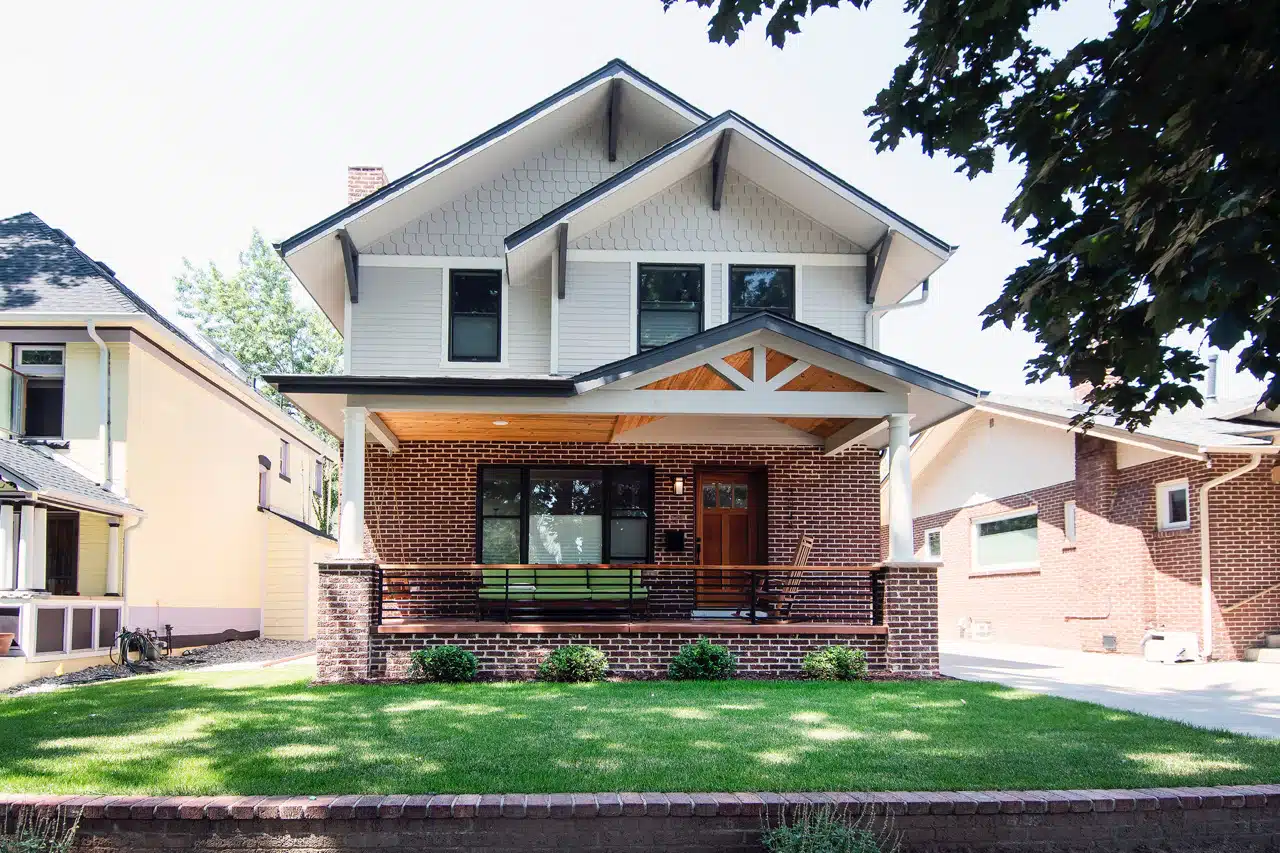
Adding a second-story addition to your home, often called a “pop top” in Denver, is a popular way to gain additional space without sacrificing your yard. This can be a big deal in Denver’s original neighborhoods, where lots can be small, and outdoor spaces can be at a premium. Very often, building a second-floor addition can offer the opportunity to reconfigure the main floor as part of the project, resulting in a home that flows well and better meets the needs of its occupants.
So, is a second-story addition right for your home? With 25 years of experience building in Denver, we here at Squareroot have seen it all. Hopefully, our insight will help you if you are considering a major remodel or second-floor addition to your home.
What are the Most Common Scenarios for Building a Second-Floor Addition?
Most of our clients over the years who have chosen to move forward with a second-floor addition share some common characteristics. Either they moved into their house when their family was smaller, and it met their needs, or they bought it for a good price, knowing they would eventually need to add on. We have found that building a second-floor addition is frequently the right choice for those who want to improve their space without leaving the neighborhood they have grown to love.
- They love their neighborhood: They have started to put down roots, made friends, committed to schools, and know where they like to eat and shop. They have looked around at other parts of the city and decided they would rather work with the house they have rather than uproot and move to a new neighborhood.
- They love their backyard: They spend a lot of time outdoors and do not want to give up that space for a large main-floor addition.
- The house simply doesn’t meet their needs anymore: Often it doesn’t have enough bedrooms or bathrooms, has a small, poorly designed kitchen, doesn’t have enough space to entertain, doesn’t have space for home offices, doesn’t have a separate place for the kids to hang out, or doesn’t have a nice guest room.
- Functional issues: The home might lack a mudroom or a place to drop coats, shoes, and bags, and may have awkward access to the basement, which is often where the laundry resides.
- Sizing mismatch: The 900 square foot bungalow that worked for a family in 1920 just doesn’t meet the needs of most modern homeowners.
- Candidate signs: If you find yourself nodding as you read through this list, maybe as you step over a pile of shoes or toys, then you might be a good candidate for a second-floor addition.
6 Things to Consider When Building a Second Floor Addition
Building a second-floor addition is no small task, and there will be extended periods of major construction and disruptions to power, water, sewer, and gas. It is important to consider the details of the project early on to determine if a pop top is right for your home.
1. Feasibility of Building a Second Floor Addition
All Denver lots, and most lots in the Denver metro area, are subject to zoning restrictions that will determine if you can build a second-floor addition on your home. In most cases, the answer is yes, but there can be setback, bulk plane, and neighborhood overlay restrictions that can impact the design of your addition. Talk to a reputable contractor or architect who can do some quick research for you to determine your specific lots’ possible restrictions.
2. Landmark Districts
If your home is located in a Denver Landmark District, your design must go through their review process and be approved before it can be submitted to the building department for permits. Landmark generally doesn’t say “no,” but they can be very specific about what they will and will not allow in regard to exterior improvements. They will often require that the addition be set back a certain distance from the front of the house so that it is less noticeable from the street, which can restrict size and functionality. Landmark will also have quite a bit of input regarding the look of your addition. Again, talk to a reputable contractor or architect who can help you navigate these preliminary conversations.
3. Support and Constructability for Building a Second Floor Addition
Can your house support the weight of a new second-floor addition? In most cases, the answer is yes, but it will ultimately require the review and approval by a licensed structural engineer. This is something that your building team will take care of very early in the design process. Just know that it is required, and expect that your building team will want this question answered early on.
4. Project Schedule
From the time you commit to the project to the time your builder has the permits in hand, it is not uncommon for the design and permitting process for your second-floor addition to take a year in Denver. The more iterative the design process, the longer it will take. For construction, it will generally take between 8 and 12 months to complete the work. Altogether, from the time you say “go” to the time you move in and start enjoying your new space, it can take anywhere from 1.5 to 2.5 years.
5. Moving Out
Even if you are planning on not touching the main floor, something we have done from time to time, you will still need to move out during construction. Adding a second floor to your Denver home will be no small task, and there will be extended periods of major construction and disruptions to power, water, sewer, and gas. It’s not practical to think about trying to live through a major renovation, so plan on moving out for the duration of the project. Also, while it may go against every grain in your body, when the project is nearing completion, allow your builder to properly finish the job, including all punch list and final inspection items, before moving in. This will allow him or her to complete the most difficult stage of any project (the last 10%) to a high level of quality—one that you deserve, and that your builder wants to provide.
6. Expected Cost
The million-dollar question (literally): How much will building a second-floor addition in Denver cost? While it is almost impossible to generalize due to the custom nature of the work, we have done enough home additions in Denver to know that the cost in 2026 will start at around $650,000 for a basic build within the existing footprint. More complex transformations often reach well beyond $1,000,000. There is no question that it is a substantial investment, and there are a host of variables that will ultimately affect the final cost of your project:
- How much of the main floor are you remodeling?
- Are you remodeling the basement as well?
- Will there be a main floor addition as well?
- Will your home include high-end finishes?
- Are you adding a garage as part of the project?
- How much landscaping will be included?
Pro Tip: Even after all your soft (architecture, interior design, and engineering) and hard (construction) costs, remember to keep an “owners budget” set aside to cover inevitable costs like window coverings and select pieces of new furniture.

Building a Second Floor Addition
A second-floor addition can be a great way to create your dream home in Denver without giving up your backyard. It has been a rare privilege of ours at Squareroot to help transform so many people’s lives by changing the basic way that they live and interact with their homes. If you think building a second-floor addition may be right for you, contact us here. We would be happy to talk with you about it!
